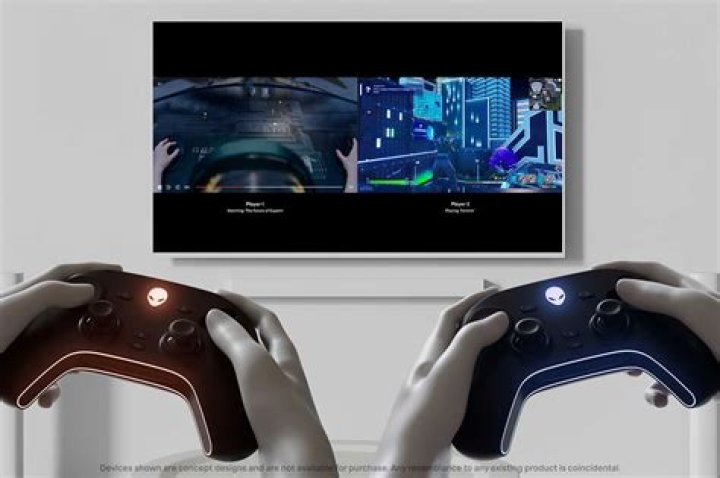
The Tenth Generation includes consoles made by Gear Games and Creative Game Co. (in Co-Development with Nintendo), Darklight Studios (in Co-Development with Nintendo, Sony, Microsoft and Valve), Pyro Enterprizes, and newcomers Isurus Multimedia Industries (in Co-Development with Nintendo) and RaGE Global .
The second generation of video game consoles started in 1976 during the “golden age of arcade video games”. During this generation, video games had new features like the microprocessor game logic, AI simulation, single-player gaming, basic colored graphics, external game storage through ROM cartridges, and had a three channel audio.
Starting in the mid-2000s and lasting into the 2010s, the seventh generation of consoles is notable for its introduction of motion-based gaming. The Nintendo Wii dominated this period in console history with its fresh and revolutionary take on playing video games.
Examples of sixth and seventh generation video game consoles are the following: 1 Xbox 360 2 PlayStation 3 3 Nintendo Wii 4 Nintendo DS/ DS Lite/ DSi/ DSi XL 5 PSP 1000/ 2000/ 3000 6 PSP Go 7 PSP E1000 8 Gizmondo 9 Pandora More
What consoles are in the Switch generation?
The major consoles of this generation include the Wii U, PlayStation 4, Xbox One, and Nintendo Switch . Sony and Microsoft made minimal changes to their hardware in terms of innovation, with Nintendo taking the prize in that category by releasing the Nintendo Switch in 2017 after the relative failure of the Wii U. The Switch is the first-ever hybrid console with three distinct modes of play: TV mode, handheld mode, and tabletop mode. Nintendo took this move to compete with the rise of mobile gaming and to attract a wider base of gamers.
Notable consoles of the fifth generation include the Nintendo 64, Sega Saturn, and PlayStation. PlayStation especially dominated the gaming landscape of the late ’90s. The introduction of fully 3D polygons revolutionized gaming in this era, giving gamers an experience like never before. Moreover, this is the era that brought CD-based gaming to the market. Compared to cartridges, CD games could hold much more data and therefore provide a longer, more detailed game. CDs were also cheaper to manufacture than cartridges, and many gamers flocked to the PlayStation’s revolutionary take on gaming. Although it didn’t do as well in comparison, the Nintendo 64 is still considered one of Nintendo’s best consoles.
The third generation has also been called the 8-bit generation since it was the start of marketing and labeling systems by their processor capabilities.
The second console generation contained the Fairchild Channel F and Atari 2600 platforms, with the latter being the best-selling console of this generation. These consoles were popular for pretty much all of the ’80s and were able to build on their predecessors’ innovations. Notably, microprocessors became cheap during this period and developers were able to take advantage of this. The second generation brought the first games that were held on cartridges rather than on the system’s hardware itself. The Atari dominated this period since they held exclusive rights to many of the most popular arcade games at the time.
The first generation of game consoles included the Magnavox Odyssey and Atari series of home game consoles. This generation comprised most of the ’70s and made some breakthrough developments that set the stage for future gaming consoles. Sound and graphics were limited, but the Odyssey introduced one of the quintessential components to modern gaming: detachable controllers and other peripherals, such as light guns, that made the gaming experience more immersive. The Odyssey also used cartridges as part of its system, which became an important element in the second generation.
Starting in the mid-2000s and lasting into the 2010s, the seventh generation of consoles is notable for its introduction of motion-based gaming. The Nintendo Wii dominated this period in console history with its fresh and revolutionary take on playing video games.
Video game consoles came into existence long before the PlayStation or Xbox saw the light of day. And although Japan currently dominates a large portion of the console gaming market now with Nintendo and Sony, video gaming console’s roots actually lie in the United States, where Ralph Baer first conceptualized “interactive television” in …
ADVERTISEMENT
When did the Magnavox Odyssey come out?
For decades, console gamers have marked time in terms of hardware generations, discrete periods in which pieces of static technology purchased and plopped into living rooms—led by the Magnavox Odyssey in 1972 —defined what was possible for players.
And when Microsoft bought Bethesda Softworks parent company Zenimax Media for $7.5 billion in September, it did so to enrich the Game Pass library with the back catalogs of Bethesda and its subsidiaries, not to ensure that future releases would be Xbox-only IP.
“There’s a reason why this is widely predicted to be the last console generation ,” wrote Polygon ’s Colin Campbell in October 2013. “Cloud gaming, holographic and VR technology are coming through.
And although gaming consoles, which double as multimedia streamers, are much more versatile than CD players, they’ll have a hard time justifying their expensive presence in a market stuffed with smart TVs and streaming sticks if they aren’t required to play games.
Games will likely be played entirely online for PS6.”. If there is a PS6, that is. Sony is preparing for any eventuality: Last month, 14 years after trademarking “PS5,” the company trademarked PS6 through PS10.
Spencer conceded that Microsoft is switching from a “device-focused to player-focused” strategy, saying, “Let’s meet them where they are, whether that’s on our current console, our next console, on the PC, or even on their phone, let’s allow them to play Xbox wherever they are.”.
Sony’s PS5 Remote Play app even allows the PS5 to be played via the PS4, and Microsoft’s xCloud streaming service could bring Xbox Series X/S support to Xbox One. PS4 DualShock controllers can be used to play PS4 games on PS5, and Microsoft’s Xbox One and Xbox Series X/S controllers are cross-compatible. Even the names of Microsoft’s old and new …
